Khami, Matabeleland North, Zimbabwe
Other names: Kame, Kami
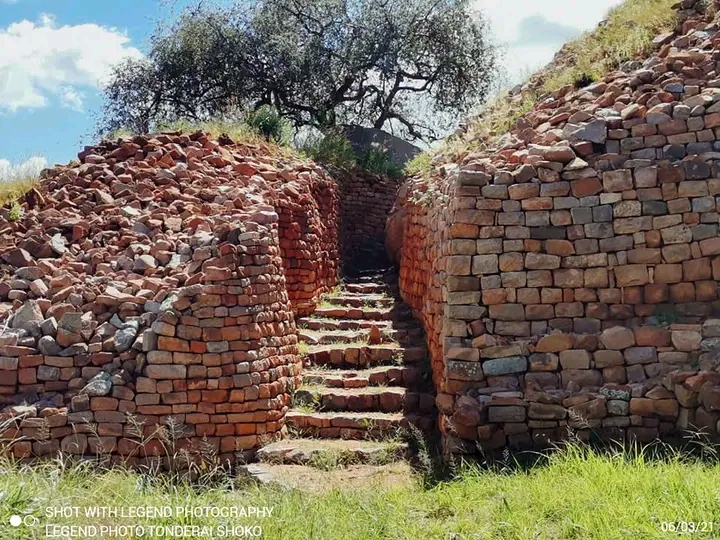
Khami is an ancient city located 22 kilometers west of Bulawayo spanning about 108 hectares of land. It was built around 1450 A.D and served as the capital of the Butwa (Butua) kingdom for two centuries. The edifices are believed to have been erected by the Torwa people.
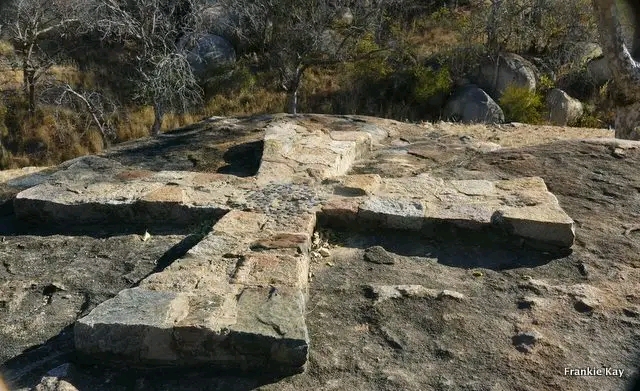
The ruins are dominated by ornately decorated terraced stone ruins. These are the Hill ruins, a three-tier platform which is opined to have hosted the royal family, the Passage ruin, two hemi-circular platforms linked by a narrow passage, the Precipice ruin, which served as a ritual centre, the Cross ruin, which house a Portuguese templar cross hewn down on one of the rocks and the Vlei ruins. The masons of the time skillfully carved the laminar granite, ubiquitous in the area, to form the chequered pattern, herring pattern, cord pattern and variegated stone blocks. The wall at some points reach heights north of 5 meters leaving the contemporary mind to ponder how imposing a look it must have cast centuries ago.
Several artefacts have been recovered from the site ranging from ivory charms, copper items, clay pots and exotic items such as those from ancient China indicating that the area was once a thriving intercontinental trade centre.
In addition to the ruins, several animal species have been noted in the area including vervet monkeys, rock hyrax(daisies), lilac-breasted rollers and African grey hornbills.
A small museum is also maintained at the site.
The ruins were declared a national monument in 1937 and a UNESCO World Heritage Site in 1986.
 Wondrous Zimbabwe